The Need for Imagination
Happy New Year!
At the start of a New Year, we often look ahead and consider the ways we want to improve our lives, personally and/or professionally. The tradition is to create resolutions as a means to shift our behavior and set goals in motion that will result in the changes that will bring success and fulfillment. Resolutions are often framed as stand-alone objectives that we hope will make a difference and propel us in a new direction. Unfortunately, these goals ofttimes fall by the wayside.
I recently listened to a Trevor Noah podcast interview with then NYC Mayor-elect Zohran Mamdani that made me think of resolutions from a different perspective.
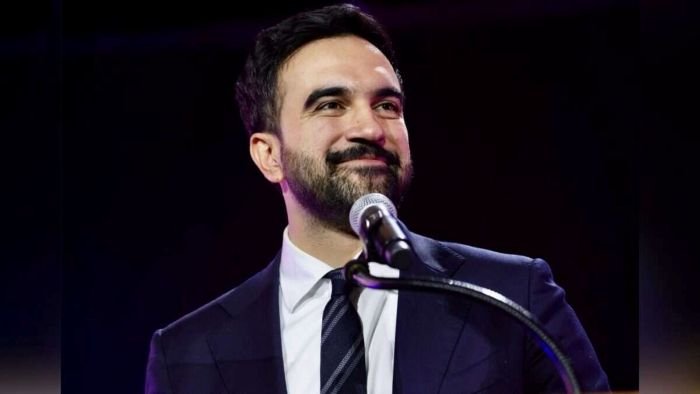
NYC Mayor Zohran Mamdani
Mamdani spoke with Noah about his transition process and team-building strategy to step into his upcoming role as the 112th Mayor of New York City. What piqued my interest was Mamdani expressing the need for imagination to transform people’s lives.
Explaining how he hires for a new administration, Mamdani said that it was based on a combination of a person’s affluency of working in government with an imagination unburdened by the difficulties of government service. The example he gave was the interview of the person who became his First Deputy Mayor. Mamdani was impressed by the candidate’s mindset of transforming from a culture of no to a culture of how. This is how he envisions a government continuing to operate yet also pushing forward in service of its residents.
Quoting Nelson Mandela as saying, “It always seems impossible until it’s done,” Mamdani said that we rob ourselves of ambition and imagination by lowering the prospective possibilities.
The Skill of Imagining
Imagination is defined as the act or power of forming a mental image of something not present or not yet perceived in reality. In a 2020 post, The Power of Imagination to Elevate Leadership, I shared French philosopher Jean-Paul Sartre’s psychology of the imagination:
Sartre contends that because we can imagine, we are ontologically free. Freedom: self-determination of expression, thought, and choice of life pursuit. A consciousness that can’t imagine, Sartre argued, would be incapable of perceiving unrealized possibilities, and therefore would lack real freedom of thought or choice. Further, Sartre thought that all of our engagements with the world have the potential to activate the imaginary process. And because the imaginary process relies on intentionality, the world is constituted not from the outside into our consciousness, but, rather, we constitute the world based on our intentions toward it.
In our Jazz Leadership Project enterprise, we note that intentionality is a core element of the Ensemble Mindset principle. Intentionality is one of the values that smooths the way for the cohesion, collaboration, and innovation essential for high performance. Intention lays the groundwork for the musicians to become a tight unit of imaginative flow. A key to that intention is the freedom of expression, voice, and creativity fundamental to each musician’s contribution to the ensemble and to the music. A vivid imagination also strengthens improvisational capacity and the ability to move with unexpected changes, as in syncopation.
The core of creativity is imagination, which is why jazz musicians rely on the power of their imagination to not only improvise and innovate, but to also create their unique sound and expression.
Neuroscience tells us that our brains respond to an imagined experience the same as a real, lived experience. Mirror neurons release chemicals to support us whether we are having the experience ourselves, witnessing the experience of someone else or imagining it. Our visualization can be a powerful trigger towards realization.
As 2026 unfolds, consider how resolutions or wishful thinking can be transformed into imaginative possibilities. What leadership qualities, values, and behaviors will you activate? What images of yourself will you ignite with more intention than creating a to-do list?