Exploring the Edges: A “Pole to Pole” Adventure
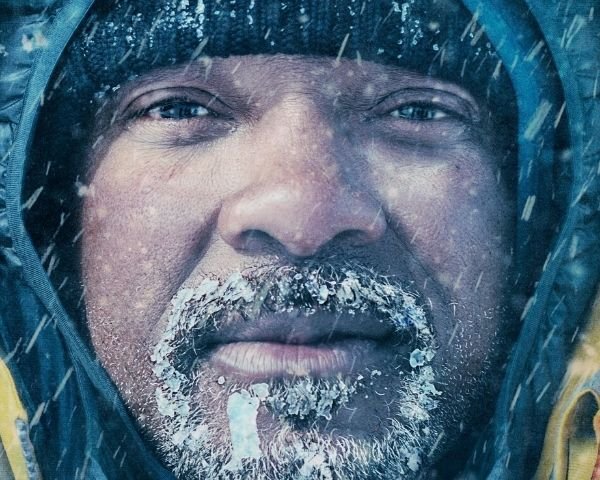
Dr. Allen Counter was a professor of neurology at Harvard Medical School and a global explorer. He often told Will Smith, who considered Dr. Counter a mentor, that he should explore the world’s edges. After declining several exploration invitations over the years, Will set out to follow his mentor’s advice after Dr. Counter’s death in 2017. In Pole to Pole, a seven-part National Geographic series, Will explores ten countries in one hundred days.
The series is gorgeously filmed. The camera lens envelopes us in the majesty and awe-inspiring vistas of seemingly endless ice-crusted tundra, densely compacted rainforest, roiling waves of expansive sea, and a vast sand-driven savanna.
Each episode brought Will to the edge of his fears and challenged him to step into and through his comfort zones as he took on a new experience. The expedition leaders enthusiastically encouraged and pushed him. Will braved minus one-hundred degree weather, walking seven plus miles to reach the South Pole; jumped off a bridge, swinging in freefall in Bhutan; trekked through the jungle to touch an anaconda; dropped three-hundred feet into a cave to find a venomous spider; dived into minus twenty-two degree water under the North Pole; and perhaps for Will, the most significant: exploring what is truly important in the search for happiness.
Most of Will’s explorations were accompanied by a physical challenge that he needed to surmount. A pivotal revelation surfaced when the exploration edge shifted from an external to an internal focus. When Will questioned the Bhutan monks about where to find happiness within, they pointed out the impermanence of everything and that the need to hold onto things is often the source of unhappiness. They suggested that he look inside himself during difficult moments.
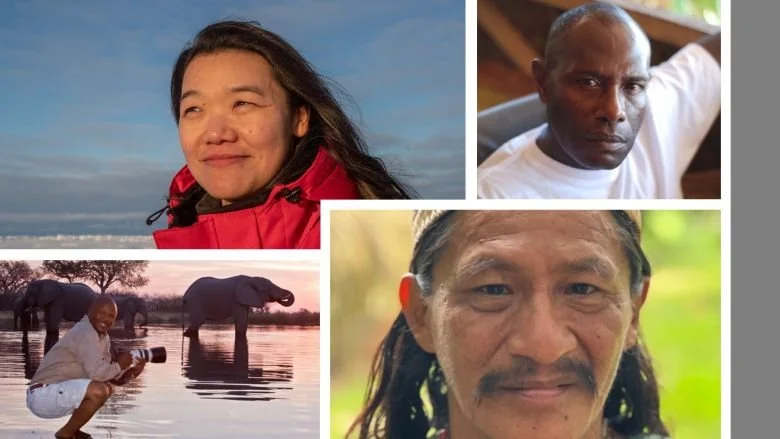
Allison A. Fong, John Aini, Penti Baihua, Kane Motswana
The Internal Edges
Commitment, dedication, and deep caring. These character qualities were evident in each of the expedition leaders as their stories unfolded. Each embodied a fundamental leadership truth: authentic commitment emerges when personal conviction meets collective need. Each locked onto their internal edge not through abstract idealism, but through intimate relationship with place, people, and purpose. Theirs was a choice that could greatly impact their community and even the world.
In the image above, starting from the top left and circling right:
Microbial oceanographer and polar ecologist Allison A. Fong shed tears after she finally secured the microbes from under the Artic ice, specifically the photosynthetic phytoplankton that Fong believes are “fundamental to the habitability of Earth” and can be pivotal in the fight against climate change.
Marine ecologist John Aini was Will’s guide across a portion of the South Pacific ocean where islands have experienced catastrophic flooding due to rising sea levels and the death of coral reefs. Aini is committed to bringing greater awareness to the predicament of their ancestral islands.
Penti Baihua, elder of the Waorani tribe, is fighting for his rainforest homeland. He led Will down the Amazon River to share the way of life they are quickly losing to oil exploration and deforestation. Baihua has become an activist, speaking at the Inter-American Court of Human Rights, to bring attention to their plight.
San Bushman Guide Kane Motswana invited Will to his village in the Kalahari Desert where the tribe struggles to maintain their hunter-gatherer existence. Joining a hunting trip showed Will that feeding villagers is tenuous due to restrictive hunting laws.
These aren't separate stories but variations on a single theme: leadership as the courage to make choices that serve something larger than ourselves. These expedition leaders reveal that the most profound internal edges aren't about conquering external frontiers—they're about the choice to stay present to what matters most, even when staying is harder than leaving. Their commitment asks us: What internal edge are we holding? What truth are we standing in?
When we experience what is important to others for their wellbeing, we discover our own edges differently. We learn that individual excellence—whether scientific, athletic, or cultural—finds its deepest meaning in service to collective survival. Like jazz musicians who bring their unique voice to create something no one could achieve alone, these leaders show us that authentic self-expression and radical interdependence aren't opposites. They're partners in the same improvisation.
The expedition leaders didn't just guide Will through landscapes—they modeled what it means to live on the edge between who we are and who we're called to become. That edge, that choice, that commitment: this is where leadership lives.