
The Color of Freedom Is Green: Remembering Tony Brown
On June 17, 2026, broadcast journalist Tony Brown died at the age of 93. He was a huge influence on my own path as a journalist and entrepreneur. I’ve referenced my work as the National Coordinator of his Buy Freedom campaign in a previous essay; to honor him, I’ll share his own words to lay out his case for economic self-determination for American black folks that lit me up back in the mid- to late-80s.
When I read the print edition of Tony Brown’s Journal magazine, featuring a green dollar sign in a circle with “Buy Freedom Campaign” emblazoned on the cover, I was moved and inspired. I had already watched a four-part series that Brown produced in 1986 titled “The Color of Freedom,” in which he made a case for Black American economic nationalism in the face of what he called economic racism. The magazine was the campaign's official launch, and after reading it from cover to cover, I became a believer and recruit.
The color of freedom wasn’t white or black. In a capitalist society, according to Tony Brown, it’s green.
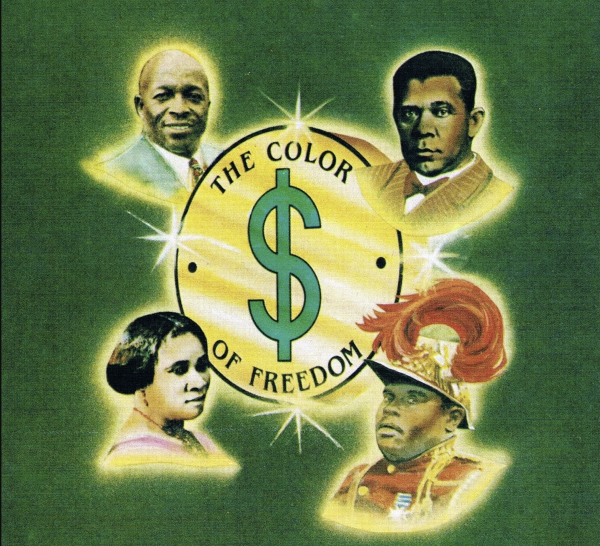
In his speeches, Brown would say: “The formula for freedom is as follows: Wealth (consumer power) equals power, and power equals freedom in all of its societal forms: political freedom, educational freedom, social freedom, and economic freedom.”
Every group in America practices what he called ethnic nationalism. “They have an economy that supports people of their own ethnic background. Every other ethnic group turns their money over five to twelve times in their own community. We spend our money less than once in our own community. A dollar remains in the black community for about four hours."
In my college studies, which took place in the first generation since the doors of higher education opened more widely to people with my “racial” background, I’d ponder: What’s the next step for my people? Jim Crow was officially over, so fountains and bathrooms with “Whites Only” signs were no longer present. But anti-black attitudes and behavior, after centuries of domination in America, weren’t going to just disappear. So much of the Civil Rights movement was dedicated to shaming and reaching the consciences of people who identified as white. What could and should we black folks do for ourselves beyond protesting and complaining about injustice?
“Those of us who are Black must distinguish between the predicament and the problem,” Brown would often say during his speeches. “A predicament is a statement of fact. Racism is a fact. Therefore, it’s not the problem; it’s the predicament. The problem is, what are we going to do about solving racism? Therefore, when we pay inordinate attention to racism, we pay no attention to the problem, which is: what are we going to do about racism?”
Brown thought that, as a people, we were caught between the horns of a dilemma and that we were literally and figuratively in the dark. We have two choices. “We can either curse the darkness or turn on the light. You can only turn on the light with truth. Truth: Not all whites are racist.
"Our condition is not dictated exclusively by racism. The only thing that keeps us in the condition we are in is our lack of faith in ourselves as a people. Change that, and we can start behaving as a serious economic market rather than as a 'poor minority,' which is how too many of us see ourselves.
"There are 30 million black Americans," he wrote in that special issue of his magazine. "That's more people than there are in the whole of Canada. We earn in excess of $200 billion a year, of which $170 billion is unrestricted income. But we spend only 6.6 percent of that with black businesses.
Echoing the argument of Harold Cruse in The Crisis of the Negro Intellectual, Brown wrote that, "Groups that use culture as a basis of economic activity, and then use pride in the culture as a basis of competition, succeed. That is what happens for Russian Jews when they come here, and it also happens for Asians and West Indians… If I am a Mormon, other Mormons, because of their belief system and way of life, improve my life chances. If I belong to a group that does not share a belief system that says we have to be responsible for each other, then my life chances are reduced.”
Brown wasn’t advocating for a boycott of non-black businesses. There weren’t enough black-owned businesses to support a self-contained economic ecosystem among African descendants. Even so, his self-help vision was audacious.
"If we spend up to 50 percent of our money with a black business, create jobs in our own community, use our own consumer income—since we don't have a manufacturing base—as a basis for capital formation and for stabilizing our families and our institutions, we would be the equal of any group in this country. You do not have to be liked to be free."
Brown’s goal was to get one million Blacks to take up his Buy Freedom challenge and patronize black-owned establishments that display the green-dollar-sign “Freedom Seal” and agree to a five-point program emphasizing:
1. Courtesy
2. Competitive prices
3. Discounts (when possible)
4. Increased employment from increased sales
5. Community involvement
For Brown, the only color of freedom in America was green. “True freedom can come only from an intelligent and humane use of the free market system,” he once wrote in the Wall Street Journal.
This perspective turned me on because I envisioned it as one way black folks could use our own resources to better ourselves without begging anyone for help or relying on the government. I wrote a letter to Mr. Brown to ask how I could assist the campaign. His office called me in to speak with Paul Brock, a friend and colleague of Brown’s who founded the National Association of Black Journalists and worked with the NAACP. To my surprise, after Brock spoke with Brown, I was offered a position: National Coordinator of the Buy Freedom campaign.
Coda
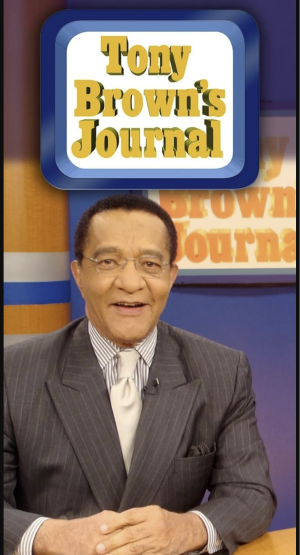
Brown hosted the longest-running black public affairs show in television history. For over forty years, and nearly 1,000 episodes on PBS, he used his platform to educate the public about the struggles and triumphs of his people, past and present. For me, he was a beacon of intelligence and dedication to truth as he saw it. On social media, some have dismissed his legacy because he became a Republican in the 1990s. That’s a short-sighted reading of the man.
I remember his reasoning back then: Black Americans overwhelmingly vote blue, for Democrats. Brown believed that in a two-party system, having representation in both parties was a strategic imperative. Without distributing votes more evenly, Democrats could take black voters for granted, and Republicans could write them off. Brown believed in self-help and the market economy and thought that dependence on the government was a dead end. His move to the Republican Party followed logically from those beliefs.
Yet, for me, his example as a public speaker, broadcast and print journalist, and steadfast advocate for the interests of Americans of African descent was a model of leadership that transcends political alignment. I became a journalist and entrepreneur in the lineage of his example. The debt is permanent.